The Beiz and the Living Heritage of Swiss Drinking Culture
Alcohol Content4.5–50% ABV
18+
This website contains information about alcoholic beverages. You must be of legal drinking age in your country of residence to continue browsing. Alcohol should be consumed responsibly and in moderation. Do not drink and drive.
Introduction
The Swiss Beiz — a word derived from the French “bise” or the Latin “hospitium”, depending on the etymology one favours — is one of the oldest civic institutions in the German-speaking cantons. More than a place to drink, it has functioned historically as a news exchange, a contract-signing venue, a post station, and a political meeting point.
To understand Swiss drinking culture is, in part, to understand this institution: its architecture, its social codes, and its relationship with the breweries and distilleries that supply it.
A Brief History of the Beiz
Records of licensed drinking establishments in the Swiss confederation date to the thirteenth and fourteenth centuries, when cantonal councils began regulating the sale of wine and ale. The earliest pubs were attached to posting inns — staging points on the trade routes connecting northern and southern Europe through the Alpine passes — and their function was as much logistical as social.
By the seventeenth century, the urban Beiz had separated from the inn and become an institution in its own right. The Swiss guilds — the Zünfte — maintained their own guild houses with drinking rooms, while craft workers and tradespeople gathered in neighbourhood pubs that served a strictly local clientele.
The nineteenth century brought industrialisation, urbanisation, and the mechanised production of lager beer. The introduction of refrigeration and bottom-fermentation technology transformed the brewing landscape across Switzerland, as across all of central Europe. Small, neighbourhood breweries multiplied rapidly — by 1900, several hundred were operating across the country.
The twentieth century saw consolidation, with larger breweries absorbing smaller ones. But from the 1990s onward, a renewed interest in traditional and craft brewing has resulted in the reopening and founding of small-scale operations across all cantons.
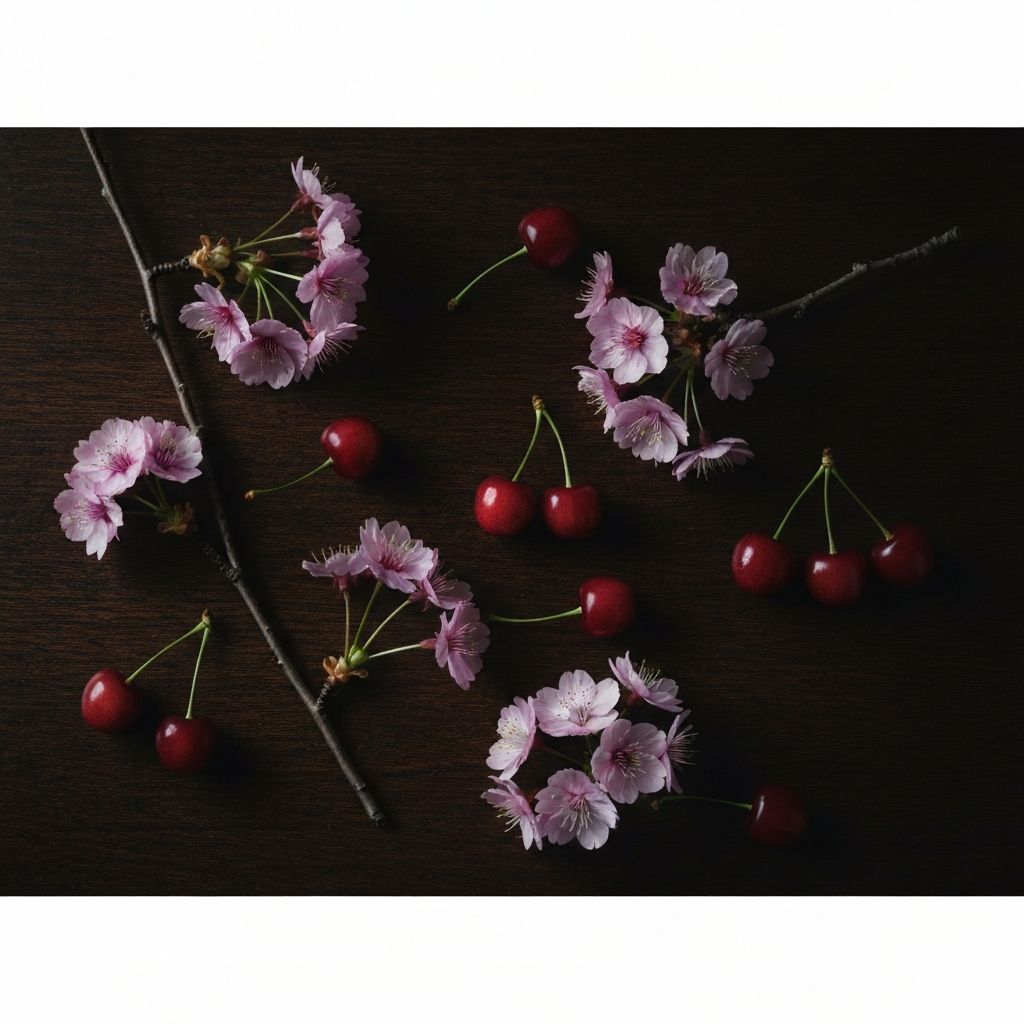
Swiss pub culture is inseparable from the agricultural traditions that supply it — the orchard, the field, the fermentation cellar.
The Architecture of the Swiss Pub
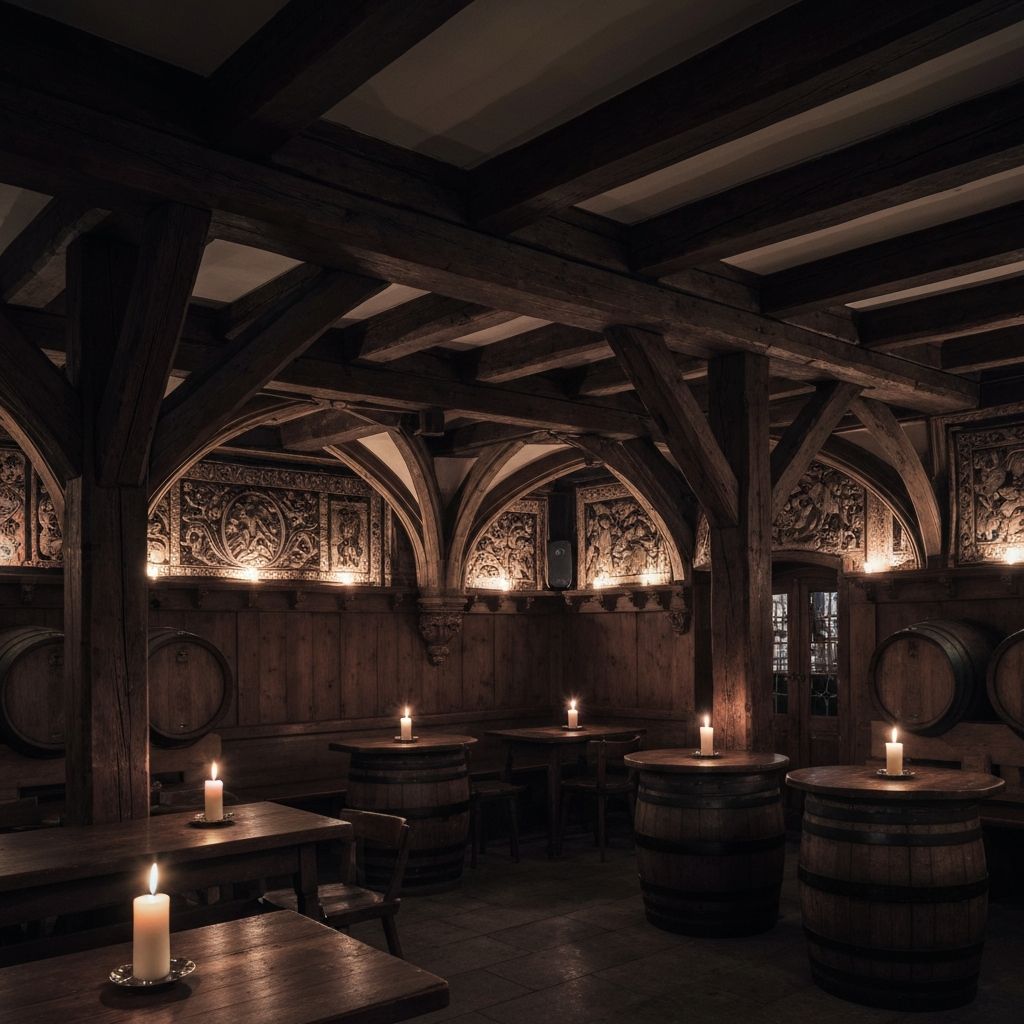
The interior of a traditional Swiss Beiz follows a recognisable typology across the German-speaking cantons, regardless of size or location. Its elements are functional and resistant to fashion — many pub interiors in active use today have remained substantially unchanged since the nineteenth century.
Täfer
The wood panelling that lines the interior walls of the traditional Beiz — typically dark-stained pine or oak, sometimes carved with regional motifs. Täfer is a defining visual signature of the Swiss pub interior and functions as both insulation and decoration.
Kachelofen
The tiled stove — a large, free-standing ceramic structure that dominates one corner of older Beiz interiors. In many rural pubs, the Kachelofen remains in operational use during winter months. It is a gathering point within the gathering point.
Stammtisch Sign
A carved or painted wooden sign hung above the reserved regulars' table. It may bear the name of the group, a date of founding, or a heraldic symbol. These signs are taken seriously — some examples date back two hundred years.
Zapfhahn
The draught beer tap — typically a simple, functional fitting of brass or stainless steel. In traditional Swiss pubs, it is placed on the counter rather than displayed on a tower, reflecting a restrained aesthetic that prizes function over spectacle.
Social Traditions
The rituals of Swiss drinking culture
The Stammtisch
Every traditional Swiss Beiz has a Stammtisch — a regular table, usually the largest in the room, reserved for a specific group of regulars who have been meeting there, often weekly, for years or decades. The Stammtisch is a social institution rather than a commercial arrangement: it represents community, continuity, and the ownership of a shared place.
Feierabend
Feierabend — literally "celebration evening" — is the German-speaking Swiss custom of marking the end of the working day with a drink among colleagues or neighbours. In the Beiz, this typically means a glass of beer or a small measure of schnapps. It is a brief, ritual pause that acknowledges the boundary between work and rest.
The Digestif Round
In Swiss German dining culture, a round of schnapps — frequently Kirschwasser or Pflümliwasser — is offered at the conclusion of a communal meal. The host typically pours from a bottle kept on the table. Refusing is acceptable but declining repeatedly may be interpreted as social distance. The gesture is one of hospitality and closure.
Brewery Festivals
Many Swiss cantons hold annual events tied to local brewing or distillation traditions. These are typically small-scale, community affairs rather than large festivals — centred on a local brewery, distillery, or agricultural cooperative — and function primarily as social gatherings for the surrounding community.
The Craft Brewing Revival
Switzerland now hosts several hundred independent breweries, the majority of which opened after 2000. This represents one of the highest concentrations of microbreweries per capita in Europe, a figure that reflects both the Swiss appetite for quality food and drink and the decentralised, cantonal structure of the country that naturally fosters local enterprise.
Many of these operations are directly connected to the Beiz — supplying a single pub, a local market, or a small restaurant group. The relationship is circular: the pub provides the community and the audience; the brewery provides the product and the identity.
Alongside beer, several of these operations have expanded into distillation — producing fruit schnapps, herbal liqueurs, and in some cases, grain spirits — further blurring the boundary between the brewery and the distillery, as it was in the pre-industrial era.